1

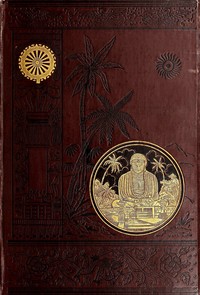
Error's chains — Background and Themes
1449
12
Project Gutenberg
2025
Mythology; Religions; Idols and images -- Worship
Readers of public-domain and historical texts
Project Gutenberg digital edition
en
Edition facts
Words: 165,008
Reading time: 718 min
Text sections: 46
Source:
Project Gutenberg record #76838
An 1883 comparative survey of global religious errors, from creation to modern times, using vivid ethnographic anecdotes and engravings to illustrate idolatry and mythology across cultures.
Frank S. Dobbins opens Error’s Chains with a personal memory: as a child, he was fascinated by pictures of idols and tales of heathen worship, much like the young missionary Alexander Duff. This anecdote frames the book as a labor of interest, not dry scholarship. The preface declares that “religion in some form is interwoven with the entire fabric of human history,” setting a tone of earnest, Victorian-era comparative religion. Dobbins promises to cover ground no single book then occupied, spanning from creation to the present, across national, social, and religious errors. The work is heavily illustrated and credited to contributors with deep Asian experience—S. Wells Williams and Isaac Hall—lending authority to its global scope.
A Child’s-Eye View of Idolatry
The preface reveals Dobbins’s method: he aims to replicate the “exhaustless interest” he felt as a boy looking at strange pictures. He recounts how Dr. Alexander Duff’s father showed him idol images on Sabbath afternoons, a practice that spurred Duff’s missionary career. This personal hook suggests the book is designed for a general reader, not a specialist. The opening frames error as a visual and narrative spectacle—something to be looked at and wondered over before being analyzed. Dobbins admits no single book covered this ground, positioning his as a pioneering compendium. The tone is confident, even moralistic, but grounded in the premise that understanding false worship is inherently absorbing.
Polynesian Oracles and the Priest’s Power
In the Oceanica section, Dobbins describes how priests delivered oracles after consuming intoxicating piper mythisticum and throwing themselves into a frenzy. Responses were “intelligible only to the initiated,” and a priest could declare a victim’s death as divine will. The text notes that “the best kinds of food were sacred to the priests and chiefs,” implying institutional manipulation. This excerpt shows Dobbins’s reliance on ethnographic detail—specific rituals, local terms, and social critique. He also recounts a Tongan myth about the sun and moon originating from a cut child, with the moon’s paleness explained by blood drainage. Such myths are presented as curious errors, but the author does not dismiss them as mere nonsense; he records them with a straight-faced precision that lets the strangeness speak for itself.
Māni’s Quest for Cooked Food
A long narrative follows the demigod Māni, who discovers cooked food in his mother’s basket and descends to the nether-world to learn the secret of fire. The text includes a chanted spell—“Buataranga, descend thou boldly through this chasm”—and Māni’s bargaining with the god Tane for a prized red pigeon named Akaotu, or “Fearless.” This myth is told as a continuous story, with dialogue and suspense. Dobbins treats it as a “peculiar tradition,” not as allegory or moral lesson. The inclusion of such a detailed tale suggests the book’s appeal lies in narrative as much as argument. Readers encounter Polynesian cosmology through a plot: a hero’s journey, a magical rock, and a stolen secret. The excerpt breaks off before the resolution, leaving the fire-secret unrevealed—a reminder that the excerpts are partial, and the full work likely contains many such embedded stories.
Structure and Scope: A Comparative Catalog
The book’s subtitle promises a “comparative history” from creation to the present, covering national, social, and religious errors. The excerpts show a pattern: each culture is introduced with a general observation (e.g., “every nation has its God”), followed by specific rituals, myths, and criticisms. Dobbins moves from Polynesia to other regions (not shown in excerpts) but the method appears consistent. The contributors—Williams, a China expert, and Hall, an Orientalist—suggest the work leans heavily on Asian and Pacific examples. The 39th edition status implies popularity. Readers should expect a catalog-like structure: short chapters or sections on each culture, with illustrations and moral commentary. The book is not a continuous argument but a series of exhibits, each meant to demonstrate how error is forged and, presumably, how it might be broken.
Error’s Chains rewards a reader who treats it as a period piece of comparative religion, not a modern academic study. The excerpts show Dobbins as a collector of curiosities—myths, rituals, and priestly deceptions—presented with Victorian moral certainty but genuine ethnographic interest. Pay attention to the illustrations (not included here) and the footnotes or credits, which may reveal the sources behind the anecdotes. The book’s structure is episodic; you can dip into any culture’s section without needing the whole. The preface’s personal tone suggests the author hoped to inspire the same wonder he felt as a child—and perhaps a similar missionary impulse.
Reader reflection
How did this book work for you?
Your answers remain private and are stored only in this browser.
Your progress
0
/
10
2
Was reading this book enjoyable?
3
How likely are you to recommend this book?
4
How much effort did this book require?
5
Which aspect of the book did you value most?
6
How did the reading compare with what you expected?
7
What did you think about the pace?
8
Did this book create an emotional response?
9
What did this book teach you most?
10