eBooks
99 Books foundExploring the EREAY Public Domain Literature Library
The EREAY Public Domain Literature Library offers access to 99 carefully selected works, all drawn from public-domain sources. This catalogue is designed for readers who wish to explore historical religious and theological texts without commercial filtering. Each record provides essential bibliographic data, a descriptive note, and a direct link to the full text.
Browsing the Catalogue
Readers may browse the entire collection through the archive page, which lists all works alphabetically by title. Each entry includes the author, publisher, and a set of keywords that reveal the work's primary subjects. For a more focused approach, the catalogue's single category—Theology—groups together works that share a religious or theological dimension. This category is intentionally broad, encompassing biblical texts, commentaries, comparative religion studies, and doctrinal works.
Understanding Book Records
Every book record in the catalogue contains the following elements: title, author(s), publisher, a set of subject keywords, a target-reader note, and a catalogue note written by the editor. The title often includes a subtitle that hints at the editorial perspective. The catalogue note offers a concise analysis, drawing attention to the work's structure, argument, or historical context. Readers should consult these notes to decide which works merit closer inspection.
Source Attribution
All texts in this catalogue originate from Project Gutenberg, a trusted repository of public-domain literature. The catalogue does not host files directly but links to the respective Project Gutenberg ebook pages. This ensures that readers can verify the source and access the most complete version available. The editor has not altered the texts; only the catalogue notes and metadata are original to EREAY.
Categories and Navigation
The catalogue currently contains one category, which serves as a thematic lens rather than a strict classification. Works are placed in this category based on their engagement with religious ideas, historical theology, or comparative religion. The category title—Theology—evokes a medieval and early modern context, but the works themselves range from ancient Egyptian funerary texts to 19th-century critiques of Christianity. This apparent mismatch underscores the editor's view that category labels are provisional guides, not definitive statements.
Three Practical Reading Paths
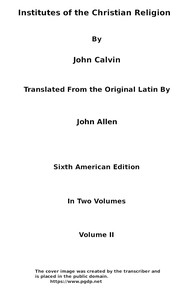
- Foundational Christian Theology: Begin with Martin Luther's The Smalcald Articles (1537), a concise summary of Reformation doctrine. Follow with John Calvin's Institutes of the Christian Religion (Vol. 1), which systematizes Protestant belief. Then explore William Wilberforce's A Practical View (1797) to see how evangelical piety shaped social reform.
- Comparative Religion and Anthropology: Start with Émile Durkheim's The Elementary Forms of the Religious Life (1912), a sociological classic. Then read Andrew Lang's Magic and Religion (1901) for a critique of Durkheim's precursors. Conclude with James George Frazer's The Belief in Immortality (Vol. 1, 1913) for ethnographic depth.
- Scripture and Interpretation: Read the King James Version books of Genesis, Exodus, and Deuteronomy as primary texts. Then consult Samuel Cox's Expositor's Bible: Ecclesiastes for a close commentary. For a critical perspective, consider G. W. Foote's Bible Romances (1883), which challenges literal readings.
- Featured